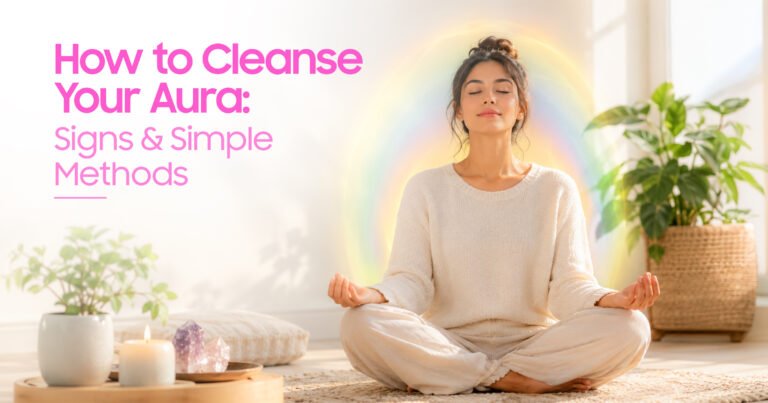
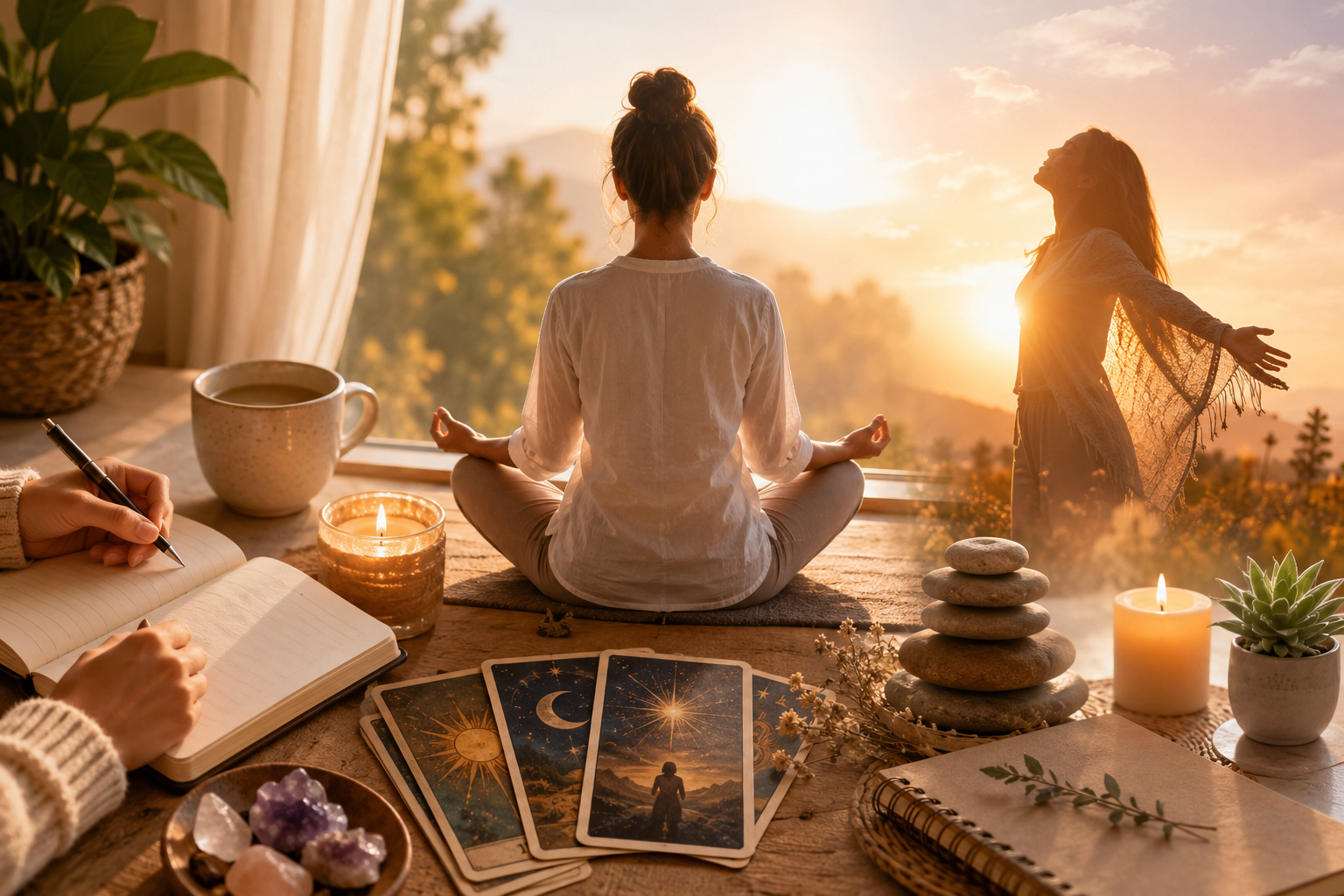
To cleanse your aura, set aside a few quiet minutes and use a simple ritual such as slow breathing, visualization, a warm shower, or a walk outside, with the intention of feeling clearer and more grounded. Aura cleansing is a spiritual self-care practice, not a scientifically established treatment.
Many people reach for this practice when they feel drained, scattered, or in need of a fresh start. This guide on how to cleanse your aura explains what an aura is believed to be, the signs people associate with needing a cleanse, seven gentle methods for home, and where the limits are. If you would like guided support with energy work, you can also explore our energy healing approach.
What Is an Aura, and What Does Aura Cleansing Mean?
In several spiritual traditions, the aura is described as a subtle field of energy around the body, sometimes said to reflect a person’s mood, health, or spirit. Some traditions describe colors or layers. These ideas come from belief and personal experience, not from laboratory measurement, and Healthline’s overview of auras notes that no scientific evidence proves they exist.
Many readers hold the belief sincerely. Others simply enjoy the ritual. Both can use what follows.
Aura cleansing means any practice done with the intention of clearing away heaviness and restoring calm. Think of it as a reset: you slow down, notice how you feel, and set an intention. Whatever you believe about energy fields, quiet attention, steady breathing, and rest are ordinary ways to settle the body and mind.
Signs People Associate With Needing an Aura Cleanse
People who practice aura cleansing often describe the same experiences. They feel emotionally drained or overwhelmed. They want time alone after being with others. Their mind will not settle, they feel cut off from their usual routines, or they simply want a fresh emotional start.
These are subjective experiences. A spiritual tradition might read them as heavy energy, and that is a fair way to describe how they feel. They are not a diagnosis.
These experiences can also have everyday or medical causes, such as a busy week, poor sleep, too much screen time, or a hard conversation. If tiredness, anxiety, low mood, or sleep problems last more than a couple of weeks or get in the way of daily life, speak with a doctor or mental health professional. A ritual can sit alongside care. It should not replace it.
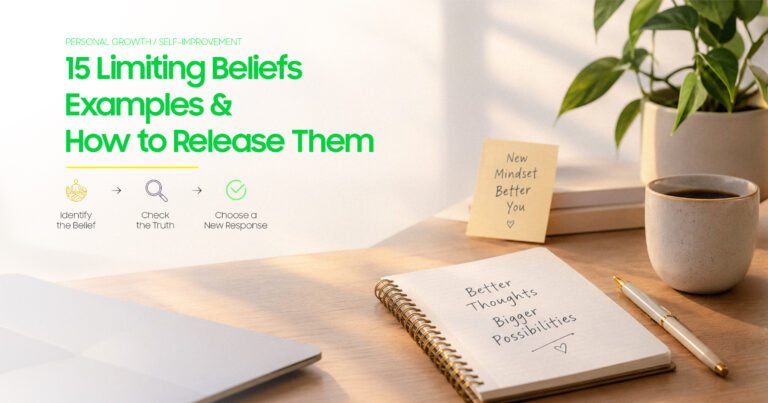
If the same thought returns every time you feel drained, such as “I have to look after everyone,” our guide to 15 limiting beliefs examples can help you examine it.
How to Cleanse Your Aura at Home: Seven Gentle Methods
- Quiet breathing and mindful attention (3 to 5 minutes). Sit comfortably. Breathe in through the nose for four counts and out for six, noticing where you hold tension. Avoid forceful breathing or long breath holds. You may notice a slower pulse and a quieter mind.
- Gentle visualization (5 minutes). Imagine soft light, white, gold, or any color you find calming, moving slowly from head to feet and carrying tension away. Traditions describe this as clearing the aura. Many people simply notice they feel more relaxed.
- A calming shower or bath (10 to 20 minutes). As you wash, picture the day’s weight rinsing away. Water that is comfortably warm, not hot, is enough. Salts are optional and are a tradition, not a proven detox. Expect comfort and loosened muscles, mostly from the warmth.
- Grounding through nature and mindful walking (10 to 15 minutes). Walk slowly outdoors and notice sounds, air, and the ground under your feet. In summer heat, choose early morning or evening. Some people find that fresh air and gentle movement lift their mood.
- Journaling and setting an intention (5 to 10 minutes). Write what feels heavy, then one sentence for the rest of the day, such as “I will move at a steady pace.” You may find your priorities clearer.
- Restoring personal boundaries (a few minutes, ongoing). Choose one small limit, such as silencing notifications after 9 pm or declining one request. Some traditions link feeling drained to absorbing other people’s energy. A practical reading is that rest and limits protect your energy. You may notice less resentment.
- Creating a calm environment (10 minutes). Open a window, tidy one surface, soften the lighting, and play quiet music. If you enjoy smoke traditions such as sage, palo santo, or incense, take care. A 2016 review of home incense use describes it as an underestimated source of indoor air pollution, with possible heart and lung effects. Keep it occasional, use a ventilated space, and skip it around infants, pets, or anyone with asthma. Smoke-free options include fresh air, soft music, a tidy room, or fresh flowers.
How Often Should You Cleanse Your Aura?
There is no set schedule. Frequency comes down to comfort, personal belief, and routine.
Some people take a two-minute breathing reset each day. Others set aside a longer ritual once a week or after a hard day. A simple rule works well: do it when it feels good, and stop if it starts to feel like an obligation.
Can Aura Cleansing Be Done Without Tools?
Yes. Every method above needs no purchase: your breath, your imagination, your own shower, a walk, a pen and paper, and an open window. Crystals, sprays, sage, and singing bowls are optional extras, not requirements.
Practitioner-led approaches work differently, using guided sessions rather than self-guided rituals. Our explainer on what Theta Healing is describes one of them in general terms.
Aura Cleansing vs. Chakra Balancing
The two are often mentioned together, but they come from different ideas.
| Aura cleansing | Chakra balancing | |
| Traditional focus | The energy field said to surround the body and reflect mood | Energy centers along the spine, in the commonly used seven-chakra framework, from root to crown |
| Typical practices | Breathing, visualization, bathing rituals, grounding, intention | Meditation on each center, mantra, yoga postures, color visualization |
| Common reasons to try it | A reset after stress or a long social day | Feeling emotionally stuck or wanting a sense of inner balance |
| Common language | Clearing and protecting | Opening, aligning, and balancing |
| Scientific support | None demonstrated for the aura itself | None demonstrated for the centers themselves |
Both are spiritual frameworks that people use for reflection and calm. For a fuller explanation of the centers, see our page on chakra healing and balancing.
Common Mistakes
Doing too much. Stacking several rituals every day can turn self-care into another chore. One method done calmly beats five done in a hurry.
Fearing negative energy. If every uncomfortable feeling or person starts to look like a threat, the practice is adding worry instead of removing it. A reset should feel gentle, not urgent.
Explaining every symptom spiritually. Headaches, constant fatigue, or low mood may need a medical check. Rule out the ordinary causes first.
Expecting dramatic effects. A calmer five minutes is a realistic result. Waiting for a big shift can leave you disappointed.
How We Work With Energy at Soul N Purpose
At Soul N Purpose, energy healing sessions are one-to-one and run in person or online, for clients in the UAE and internationally. A session can include an intuitive energy assessment, aura cleansing, grounding techniques, guided relaxation, and practical self-care suggestions to use afterward. You can read the full list on our energy healing page.
Our work is a complementary wellness practice. It is not intended to replace medical or psychological treatment, and it is not a diagnosis.
Try This Practice: A 10-Minute Grounding Routine
Goal: Settle your body and attention so you feel steadier and clearer.
Preparation: Find a quiet seat, silence your phone, set a 10-minute timer, and keep a glass of water nearby. Wear comfortable clothing.
Time required: 10 minutes.
- Sit with both feet on the floor and your hands resting on your lap. Close your eyes or lower your gaze. (1 minute)
- Breathe in for four counts and out for six, slowly and without strain. (2 minutes)
- Scan from head to feet. Notice your jaw, shoulders, and hands, and soften one area of tension. (2 minutes)
- Picture soft light moving slowly from the top of your head to your feet, carrying tiredness down into the floor. (2 minutes)
- Silently say one sentence of intention, such as “I am allowed to rest.” (1 minute)
- Press your feet into the floor and name five sounds you can hear. (1 minute)
- Open your eyes, drink some water, and stretch gently. (1 minute)
What to notice: Changes in your shoulders, jaw, or breathing, and how busy your thoughts feel.
Reflection question: What did I notice in my body that I missed before I sat down?
How to assess whether it helped: Rate your comfort from 0 to 10 before and after. Success means a little more calm, comfort, or self-awareness. If nothing shifts, try another method or a different time of day.
A realistic limitation: This is a short self-care routine. It will not resolve ongoing stress or physical symptoms.
Frequently Asked Questions
How can I cleanse my aura at home?
Choose one method from the list and try it for a week. An easy starting point is five minutes of slow breathing or a warm shower taken with a calm intention.
Can I cleanse my aura without crystals or incense?
Yes. Breathing, visualization, walking, and journaling cost nothing. Skipping incense also avoids its indoor air quality drawbacks.
How long does an aura cleansing practice take?
Anywhere from two minutes for a breathing reset to about twenty for a bath or long walk. Short and regular tends to be easier to keep up.
What does aura cleansing feel like?
Some people report a little more calm, a lighter mood, or sleepiness. Others feel nothing, and that is fine.
Is there scientific evidence for auras?
No. Scientific evidence has not shown that auras exist or that cleansing one changes anything measurable. That does not stop a quiet ritual from feeling helpful, since calm attention and rest have effects of their own.
Make Space to Feel Grounded
You do not need to be in crisis, or to feel damaged, to want a reset. A hard week is reason enough to slow down.
Start small. Pick one method, give it a few minutes, and repeat it when it helps. If it becomes a source of pressure, set it down and try something else, or simply rest.
If you would like company with this kind of work, you can book a free discovery call, a free 15-minute online conversation with no obligation, to talk through your options.