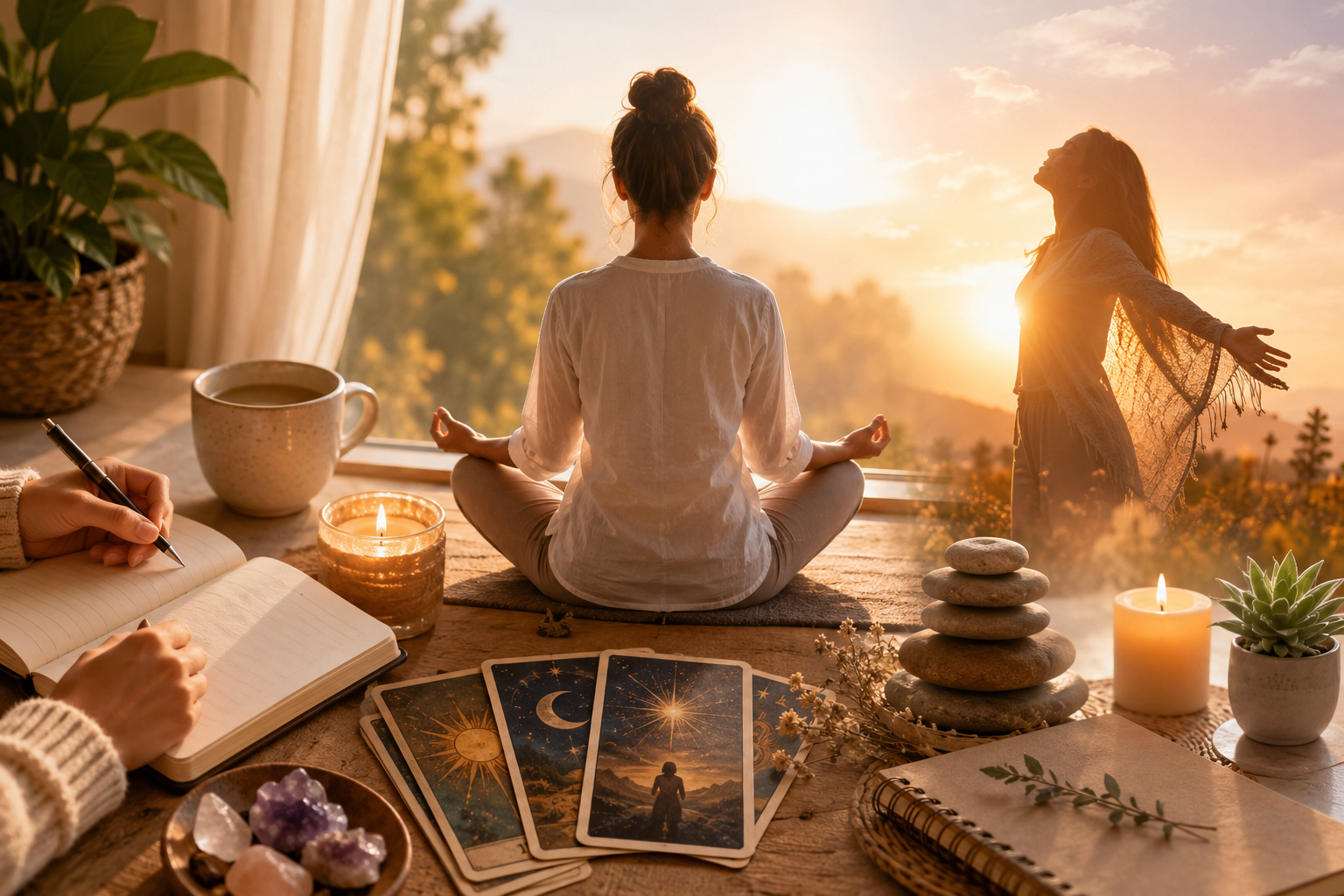
Our bodies are more than physical structures. Many spiritual traditions view us as energetic beings, with energy flowing through different centres that influence how we experience ourselves and the world around us. When life feels overwhelming, emotions feel unsettled, or you simply feel disconnected from yourself, working with your chakras can become a gentle way to pause, reflect, and reconnect.
Chakra balancing techniques are practices designed to support a sense of energetic harmony and inner awareness. They can include meditation, breathwork, movement, visualisation, sound, and mindful self-care.
In this article, we’ll explore 10 simple techniques you can start incorporating into your everyday routine.
What Are Chakras?
In traditional Indian spiritual and yogic systems, chakras are described as energy centres within the subtle body. The seven main chakras are commonly associated with different areas of the body and aspects of emotional, psychological, and spiritual experience.
They are generally identified as
- Root Chakra (Muladhara) – associated with grounding, stability, and security.
- Sacral Chakra (Svadhisthana) – associated with creativity, pleasure, and emotional expression.
- Solar Plexus Chakra (Manipura) – associated with confidence, motivation, and personal power.
- Heart Chakra (Anahata) – associated with compassion, love, and connection.
- Throat Chakra (Vishuddha) – associated with communication and self-expression.
- Third Eye Chakra (Ajna) – associated with intuition, reflection, and inner awareness.
- Crown Chakra (Sahasrara) – associated with spirituality, consciousness, and a sense of connection.
Chakra work is a spiritual and contemplative practice rather than a replacement for medical or mental health treatment.
Ten Chakra Balancing Techniques to Try
-
Practise Chakra Meditation
One of the simplest ways to begin is through chakra meditation. Meditation gives you an opportunity to slow down, become aware of your breathing, and focus your attention inward.
Sit comfortably and take several slow breaths. Bring your attention gradually from the base of your body towards the top of your head. As you focus on each chakra, imagine a gentle flow of energy moving through that area.
You can also use colours traditionally associated with each chakra as visualisation points.
Even five to ten minutes can create a meaningful moment of stillness in your day.
-
Try Deep Breathing
Breathwork is another accessible practice that can accompany chakra work.
Sit comfortably and breathe slowly through your nose. Allow your abdomen to expand as you inhale and gently release the breath as you exhale.
Rather than forcing your breathing, focus on making it steady and comfortable.
As you breathe, imagine releasing tension with every exhale and creating space for calm with every inhale.
-
Use Chakra Healing Exercises
Chakra healing exercises can involve gentle movement, stretching and mindful body awareness.
Yoga is particularly popular within chakra-based spiritual practices. Different poses can encourage you to focus on particular areas of the body while combining movement with conscious breathing.
For example, grounding poses such as Mountain Pose can be paired with root chakra balancing practices, while gentle heart-opening movements can encourage reflection around compassion and emotional connection.
The goal is not to perform complicated poses. It is to move with awareness and intention.
-
Spend Time Grounding Yourself
Feeling scattered or disconnected can be a reminder to slow down and reconnect with the present moment.
Grounding practices can include walking slowly outdoors, sitting on the ground, spending time in nature or simply paying attention to the sensations around you.
For those interested in root chakra balancing, grounding can become a meaningful part of a regular spiritual routine.
Try taking a slow walk without your phone. Notice the sensation of your feet touching the ground, the sounds around you and the rhythm of your breathing.
-
Work With Affirmations
Words can influence where we place our attention.
During your chakra practice, try using affirmations that reflect the quality you want to cultivate.
For example:
Root Chakra:
“I am grounded, safe and supported.”
Heart Chakra:
“I allow myself to give and receive love.”
Throat Chakra:
“I express myself honestly and clearly.”
Crown Chakra:
“I remain open to wisdom and connection.”
Repeat an affirmation slowly while breathing deeply. Choose language that feels authentic rather than forcing yourself to believe something that feels disconnected from your experience.
-
Use Visualisation
Visualisation can add another dimension to your chakra practice.
Close your eyes and imagine a soft light surrounding the area associated with the chakra you are focusing on. Traditionally, each chakra is associated with a particular colour.
You might visualise a red glow around the base of the spine when focusing on the root chakra or a violet or white light above the head when focusing on the crown chakra.
Allow the image to remain gentle and comfortable rather than trying to force a particular sensation.
-
Incorporate Sound and Mantras
Sound has long been incorporated into meditation and spiritual traditions.
You can use calming music, singing bowls, chanting or simple mantra repetition during your practice.
If you prefer something simple, choose a short word or phrase and repeat it slowly while maintaining your breathing.
The purpose is to create a focused and calming ritual that helps you become more present.
-
Practise Mindful Journalling
Chakra work does not have to involve meditation or physical movement.
Journalling can help you explore thoughts and emotions that you may normally overlook.
Choose one chakra and ask yourself a few reflective questions.
For example, when focusing on the heart chakra, you might ask:
- What relationships currently bring me a sense of connection?
- Is there anything I am struggling to let go of?
- How can I show myself more compassion?
When focusing on the throat chakra, you could reflect on whether there are thoughts or feelings you have been hesitant to express.
There are no right or wrong answers. The value comes from creating space for honest reflection.
-
Create a Calming Chakra Ritual
If you are wondering how to balance chakras at home, creating a simple ritual can make the practice easier to maintain.
Choose a quiet space and make it comfortable. You might light a candle, play gentle music, practise breathing or meditation, and spend a few minutes journalling afterwards.
Your routine could be as simple as:
5 minutes: Deep breathing
5 minutes: Chakra meditation
5 minutes: Gentle stretching
5 minutes: Journalling or affirmations
You do not need expensive crystals, elaborate equipment or a large amount of free time. Consistency and intention can make the practice feel more meaningful.
-
Spend Time in Quiet Reflection
Sometimes the most powerful practice is simply creating space to be still.
Put your phone away, sit comfortably and allow yourself a few quiet minutes without distractions.
Notice your thoughts without judging them. Pay attention to your breathing and physical sensations. If your mind wanders, gently bring your attention back.
This simple practice can complement other chakra balancing techniques and help you develop greater awareness of your inner experience.
How Often Should You Practise Chakra Balancing?
There is no universal schedule for chakra practices.
You could dedicate 10 to 15 minutes to your practice a few times a week or spend a few minutes each morning focusing on your breath and intention.
Some people prefer focusing on one chakra at a time, while others enjoy a full-body meditation involving all seven chakras.
The most important thing is to choose a routine that feels sustainable rather than turning spiritual practice into another source of pressure.
Can You Balance Your Chakras at Home?
Yes. Many chakra practices can be performed at home without specialist equipment.
Meditation, breathing exercises, gentle yoga, visualisation, affirmations, journalling and grounding are all accessible options.
If you are learning how to balance chakras at home, start with one or two practices rather than trying everything at once. For example, begin with five minutes of chakra meditation each morning and add gentle stretching or journalling when you feel comfortable.
Over time, you can develop a personal routine that fits naturally into your lifestyle.
In a nutshell, there is no single approach to chakra balancing that works for everyone. You might connect deeply with meditation, while someone else may prefer movement, journalling or time spent in nature.
The beauty of exploring chakra balancing techniques is that you can create a practice that feels personal and meaningful to you.
Start small. Take a few conscious breaths. Sit quietly. Stretch your body. Write down what you are feeling. Give yourself permission to slow down.
Sometimes, reconnecting with yourself begins with nothing more complicated than creating a little space to listen within.
Can Chakra Balancing Support Your Inner Wellbeing?
Chakra practices can create space to slow down, reconnect with yourself and become more aware of your emotional and energetic needs. Guided support can help you explore meditation, grounding, breathwork and other practices in a way that feels personal and manageable.
At Soul N Purpose, chakra and energy work forms part of a holistic approach to self-discovery and personal growth. Sessions offer a supportive space to explore your inner world at your own pace, without a one-size-fits-all approach.
Ready to explore greater balance and self-awareness? Connect with Soul N Purpose and begin your journey.
FAQs
- What are chakra balancing techniques?
Chakra balancing techniques are spiritual and mindfulness practices associated with the seven main chakras. They can include meditation, breathwork, yoga, visualisation, affirmations, sound practices and journalling.
- How can I balance my chakras at home?
You can explore chakra practices at home through meditation, deep breathing, gentle yoga, grounding exercises, visualisation and affirmations. Start with a simple routine that feels comfortable and sustainable.
- What is chakra meditation?
Chakra meditation is a meditative practice that focuses attention on the body’s traditionally recognised energy centres. It may involve breathing, visualisation, colours, affirmations or guided meditation.
- What exercises can help with chakra balancing?
Gentle yoga, stretching, breathwork and grounding exercises are commonly incorporated into chakra practices. The specific practice can depend on which chakra you want to focus on.