Dubai is a city calibrated for achievement. Under the gleaming skyline of Downtown, the vibrant energy of Dubai Marina, and the executive suites of DIFC, life moves at a pace that few cities in the world can match. Professionals and entrepreneurs from more than two hundred nationalities relocate to the United Arab Emirates with bold visions, eager to scale businesses, build generational wealth, and design aspirational lifestyles.
Even when everything appears to be going well on the outside, you may find yourself questioning your direction, struggling to maintain boundaries, or repeating patterns that no longer serve you. Perhaps you want to change careers but cannot decide where to begin. Maybe you are finding it difficult to adjust to life in a new country, or past experiences continue to influence your relationships and everyday decisions.
Seeking support can help you understand what you are experiencing and identify a constructive way forward. This often leads to one important question: life coach vs therapist, which one do you need?
Although both can provide a supportive space for personal reflection, their roles, qualifications, and areas of focus differ. Understanding the difference between a life coach and a therapist can help you choose support that aligns with your circumstances, needs, and goals.
What Is the Difference Between a Life Coach and a Therapist?
The main difference between a life coach and a therapist lies in their purpose, qualifications, and scope of practice.
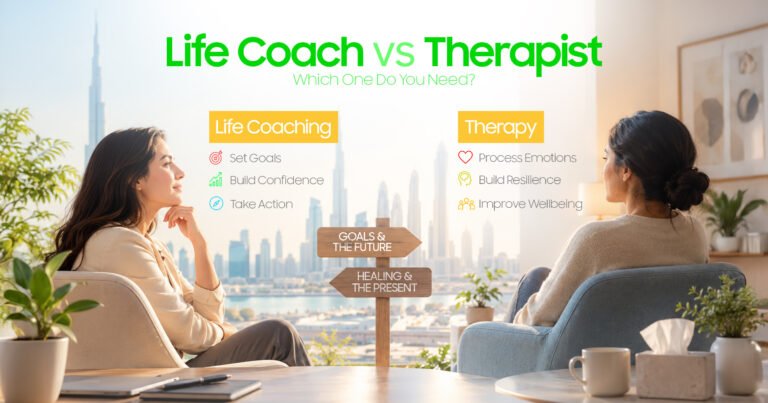
A life coach generally helps people clarify goals, explore opportunities, overcome practical obstacles, and take purposeful action. Coaching is often future-focused, with sessions centred on personal development, decision-making, habits, and accountability.
A therapist, depending on their qualifications and professional registration, may help people understand emotional difficulties, process challenging experiences, and address mental health concerns. Therapy can explore how past experiences and present circumstances affect emotional wellbeing and everyday functioning.
For example, someone who feels ready for a career change but needs help setting priorities and developing an action plan may benefit from life coaching. Someone whose difficulty making decisions is accompanied by persistent emotional distress may benefit from speaking to a qualified mental health professional.
Neither approach is automatically better than the other. The right choice depends on what you are experiencing and the kind of support you need.
What Does a Life Coach Help You With?
Life coaching provides a structured space to examine your goals, recognise obstacles, and identify practical steps towards change. Rather than making decisions for you, a coach helps you consider your options and develop strategies that reflect your priorities.
For Dubai residents balancing demanding careers and personal responsibilities, coaching may be useful when there is a clear desire for change but uncertainty about how to achieve it.
Common areas of focus include:
- Career development: Exploring a new professional direction, preparing for leadership responsibilities, or planning a business venture.
- Confidence and decision-making: Identifying personal priorities and approaching important choices more intentionally.
- Habits and productivity: Creating realistic routines, managing time, and improving follow-through.
- Boundaries and work-life balance: Reviewing competing responsibilities and finding ways to protect time for personal priorities.
- Personal growth: Clarifying values, defining meaningful goals, and building accountability for the changes you want to make.
A coaching session may involve setting a specific goal, examining what has prevented progress, and agreeing on practical actions to take before the next session.
However, life coaching is not a substitute for mental health assessment or clinical treatment. Coaches should work within their training and refer clients to appropriately qualified professionals when concerns fall outside their scope of practice.
When Is Therapy or Counselling More Appropriate?
Therapy or counselling may be more suitable when emotional difficulties require support beyond goal-setting and practical planning. The specific services available depend on the professional’s qualifications, training, and authorised scope of practice.
You might consider seeking support from a qualified mental health professional if you are experiencing persistent distress, struggling to cope with grief or a major life transition, or finding that emotional difficulties are affecting your relationships, work, or daily routines.
Professional support may help with:
- Processing grief, separation, or other significant life changes.
- Understanding emotional responses connected to difficult past experiences.
- Developing strategies for managing distress and challenging situations.
- Addressing mental health concerns through appropriate assessment and care.
- Exploring recurring relationship difficulties and their emotional impact.
For example, an expatriate who feels unsettled after moving to Dubai might initially assume they simply need better time management. However, if the transition is accompanied by ongoing distress that interferes with everyday life, counselling or mental health care may be a more appropriate starting point.
Seeking professional support does not mean you have failed to manage a situation independently. It is a way to access guidance that matches your needs.
Life Coach vs Counsellor: Understanding the Terminology
The terms life coach, counsellor, and therapist are sometimes used interchangeably, but they do not necessarily refer to the same role.
A life coach generally focuses on personal development, goal-setting, and accountability. A counsellor may support people through emotional or situational challenges, depending on their training and professional scope. A therapist’s role can also vary but may include mental health assessment and treatment where they hold the appropriate qualifications and authorisation.
When choosing a practitioner in Dubai, look beyond the title. Check their qualifications, relevant experience, approach to confidentiality, and the types of concerns they are equipped to handle. Where regulated mental health services are involved, verify the practitioner’s relevant licence or registration.
This distinction matters because the most suitable professional is not necessarily the one with the most appealing title. It is the one whose training and services align with the support you need.
Do You Need a Life Coach or a Therapist?
If you are still unsure, start by identifying the main challenge you want to address.
Life coaching may be a suitable option if:
- You want to define personal or professional goals.
- You feel ready for change but need structure and accountability.
- You are considering a career move or new business opportunity.
- You want to improve routines, boundaries, or decision-making.
- You are looking for support with personal development and future planning.
A qualified therapist or counsellor may be more appropriate if:
- Emotional distress is persistent or interfering with everyday life.
- You are struggling to cope with grief or difficult personal experiences.
- You have concerns about your mental health and need professional assessment.
- Your difficulties are affecting your relationships, sleep, work, or daily responsibilities.
- You need support that falls within a clinical or counselling professional’s scope of practice.
These are general guidelines, not a diagnosis. You do not need to wait until a problem becomes overwhelming before seeking help. If you are uncertain about the right starting point, a conversation with an appropriately qualified professional can help clarify your options.
Can Life Coaching and Therapy Work Together?
Life coaching and therapy can serve different purposes, and some people may benefit from both at different stages of life. The important consideration is that each professional works within their own expertise and responsibilities.
For example, a person receiving therapy for emotional difficulties may later decide to work with a life coach on career planning, daily routines, or leadership goals. In other circumstances, someone may pursue coaching for a specific goal while continuing appropriate mental health care.
The two approaches should not be treated as interchangeable. Coaching does not replace clinical assessment or treatment when these are needed. Any combined approach should complement, rather than interfere with, the person’s existing care.
Ultimately, support should reflect your circumstances rather than a fixed idea of what personal growth is supposed to look like. Sometimes the priority is addressing emotional difficulties; at other times, it is turning an existing ambition into a practical plan.
Explore Personal Growth with the Right Support
Choosing between a life coach and a therapist begins with understanding what you want help with. If your priority is setting goals, exploring personal values, or developing a clearer direction, coaching may provide a useful framework. If you are experiencing persistent emotional distress or concerns about your mental health, a qualified mental health professional is a more appropriate starting point.
For those interested in self-awareness and personal development, holistic guidance can offer an opportunity to reflect on priorities, examine choices, and consider new perspectives.
Soul ’n Purpose offers holistic guidance and personal development services for individuals interested in exploring their goals and personal growth. Contact us today to learn more about our services and decide which approach aligns with your needs.
FAQs
What is the primary difference between a life coach and a therapist in Dubai?
A life coach generally helps people set goals, make decisions, and develop practical strategies for personal or professional growth. A therapist may provide mental health assessment and support for emotional difficulties, depending on their qualifications and scope of practice.
Should I choose a life coach or counsellor for relationship difficulties?
A life coach may help with communication goals, boundaries, and practical changes within their expertise. A qualified counsellor or therapist may be more appropriate when relationship difficulties involve significant emotional distress or concerns that require professional assessment.
Is a life coach suitable if I feel overwhelmed?
Coaching may help if you want to organise your priorities, develop routines, or work towards specific goals. If feeling overwhelmed is persistent, affects your daily functioning, or raises concerns about your mental health, consider seeking support from a qualified mental health professional.
Can I work with a life coach and a therapist at the same time?
In some circumstances, yes. Therapy may support mental health needs while coaching focuses on separate personal or professional goals. Each practitioner should remain within their professional scope, and coaching should not replace necessary clinical care.
5. How do I choose the right practitioner in Dubai?
Consider your main concern, the kind of support you are seeking, and the practitioner’s qualifications and experience. For clinical mental health services, verify the relevant professional licence or registration. Before committing, ask about their approach, confidentiality, fees, and whether they are equipped to support your particular needs.